

EARTH, TRADITION AND PASSION
Gli occhi dischiuse il vecchio al giorno,
non si guardò neppure intorno, ma versò il vino,
spezzò il pane per chi diceva ho sete e ho fame.
– Fabrizio De Andrè “Il Pescatore” –
La Tenuta Ca' Sciampagne
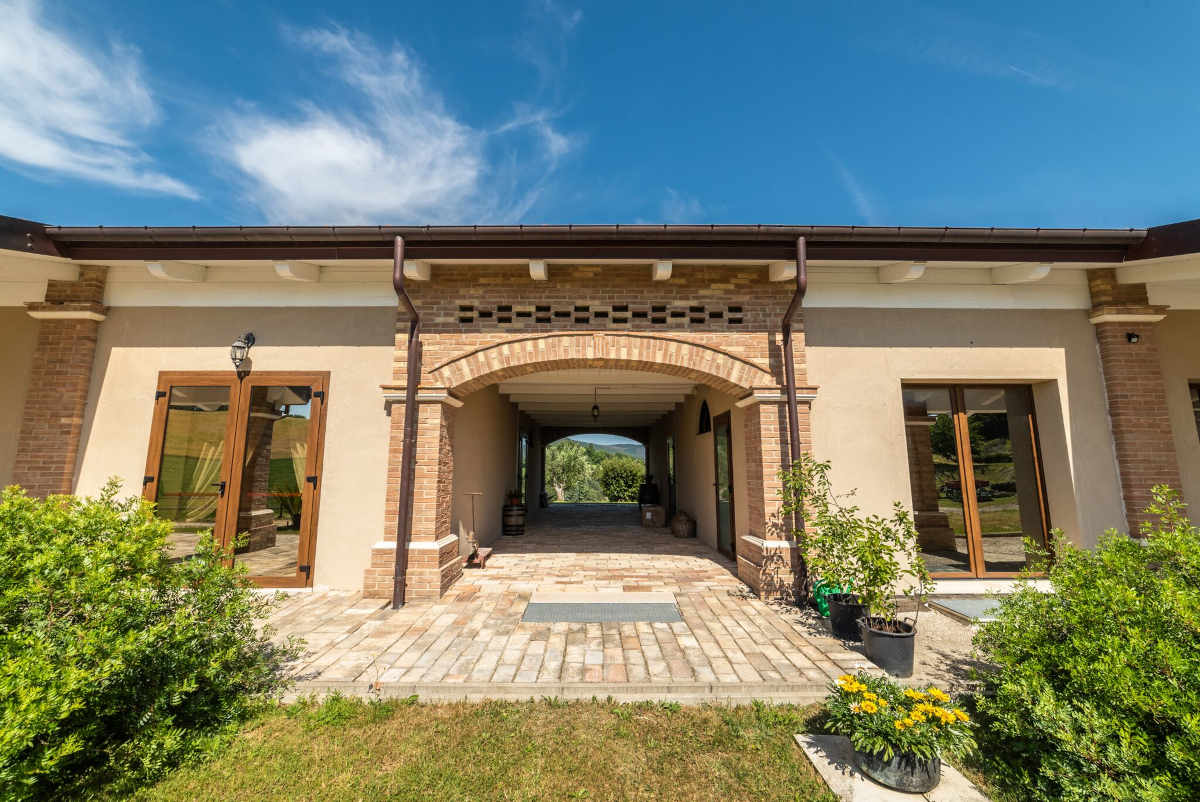
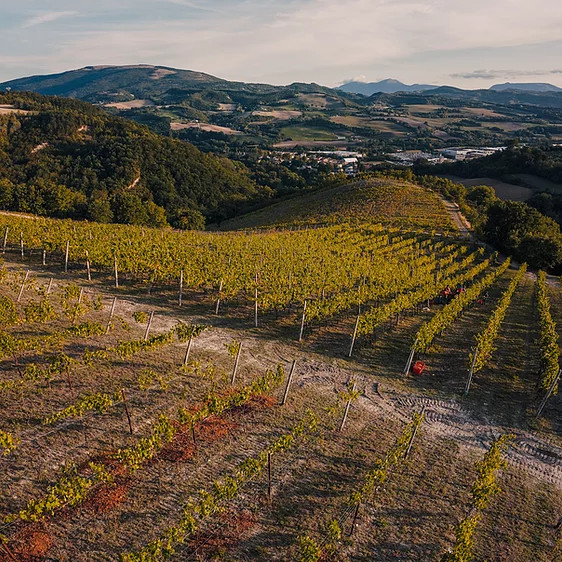
Tenuta Ca’ Sciampagne takes its name from the cadastral area where most of its vineyards are planted.
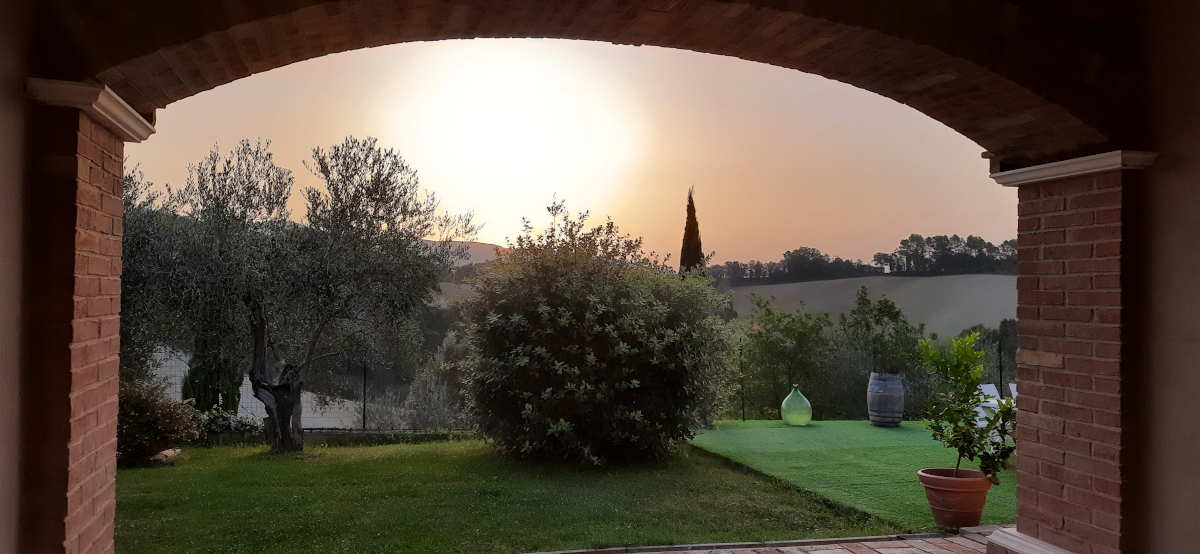
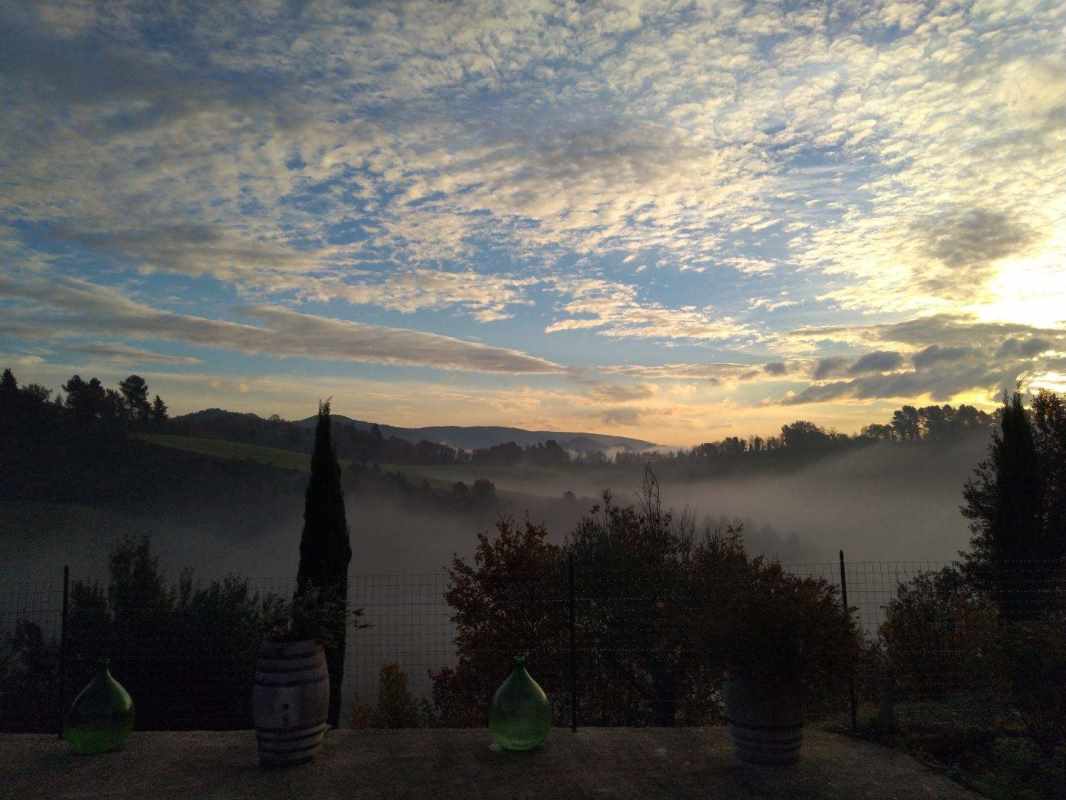
It is located on the outskirts of Urbino, nestled within the Monti delle Cesane Natural Park, just 3 km from the Renaissance city that gave birth to the painter Raphael and was home to Duke Federico da Montefeltro.
The winery was founded in 2008 with the restoration of over three hectares of old vineyards and the planting of an additional five.
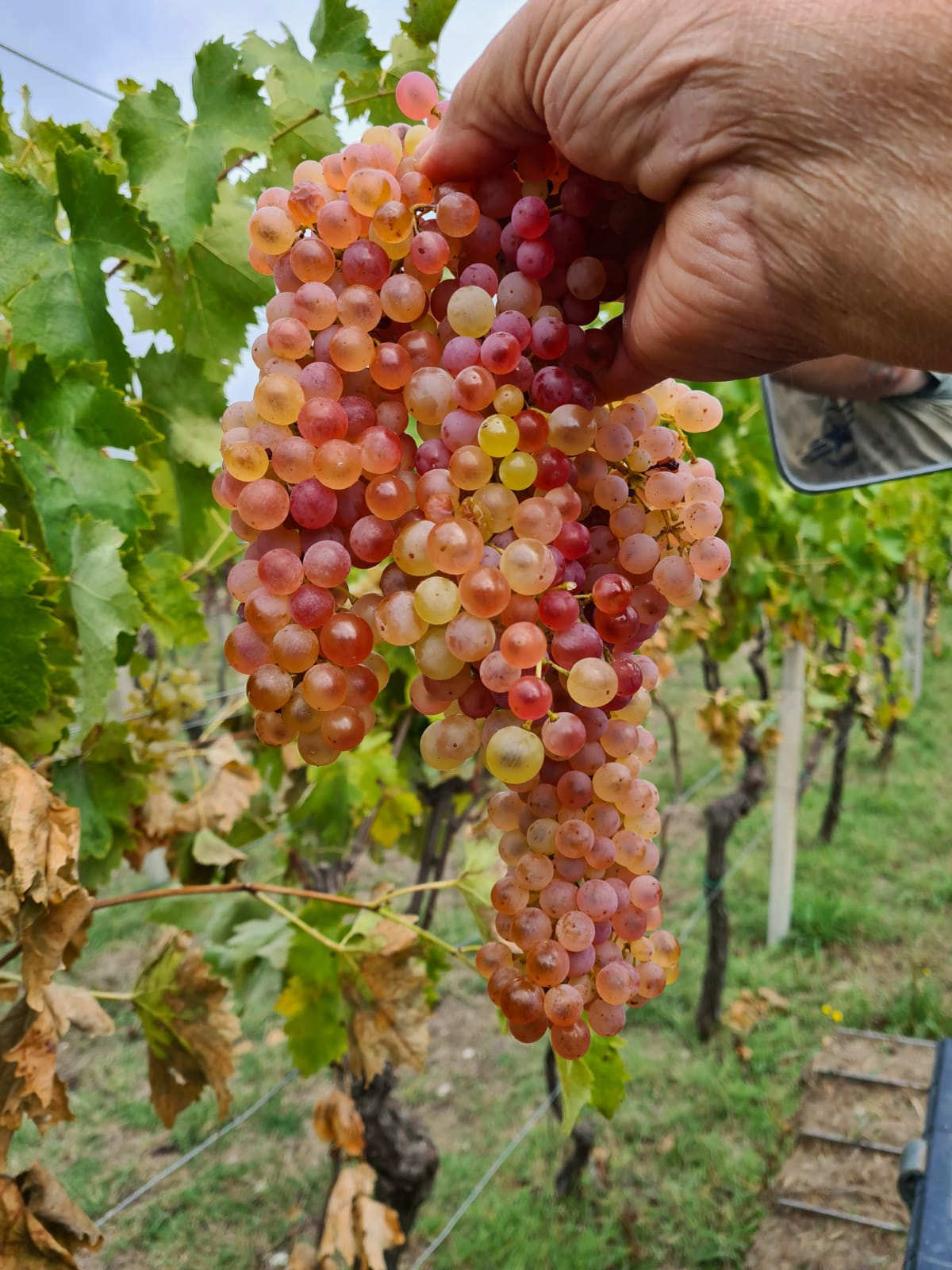
It cultivates native grape varieties such as Biancame, Sangiovese, Aleatico, and Alicante, as well as white varieties like Chardonnay and Sauvignon Blanc.
The estate makes absolutely no use of chemicals or herbicides, except for occasional treatments with very small amounts of copper and sulfur in the vineyard, and, only when strictly necessary, minimal doses of potassium metabisulfite in the cellar.
The winery
The winery works under a certified organic system and processes only grapes from its own production.
It produces white, orange, ancestral, and refermented wines, as well as red wines and dessert or meditation wines.
The winemaking techniques are traditional: from the hand selection and harvesting of the grapes, to destemming and crushing, followed by either white vinification or skin maceration for both white and red wines, and spontaneous fermentation using only indigenous yeasts. There is no clarification and no filtration.
The process differs for the grapes used to produce the passito wines: after the late harvest, the grapes are dried in the fruit loft for a period ranging from 3 to 6 months, during which they slowly dehydrate and become enriched with glycerin.
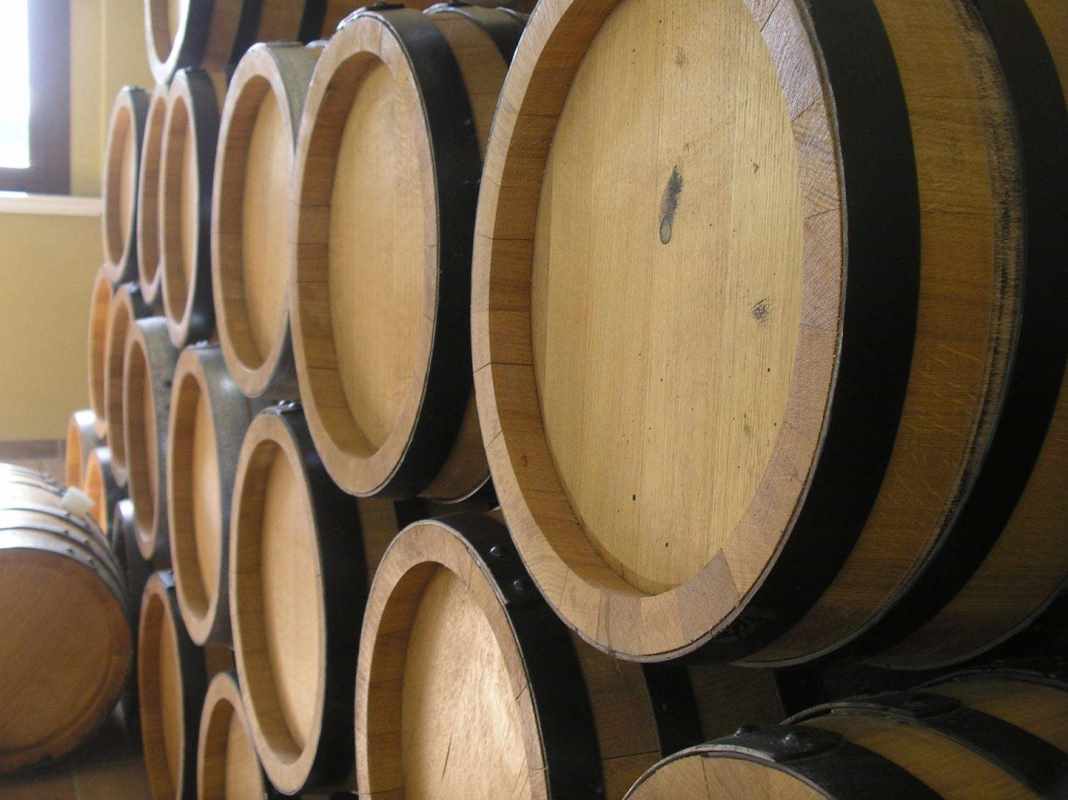
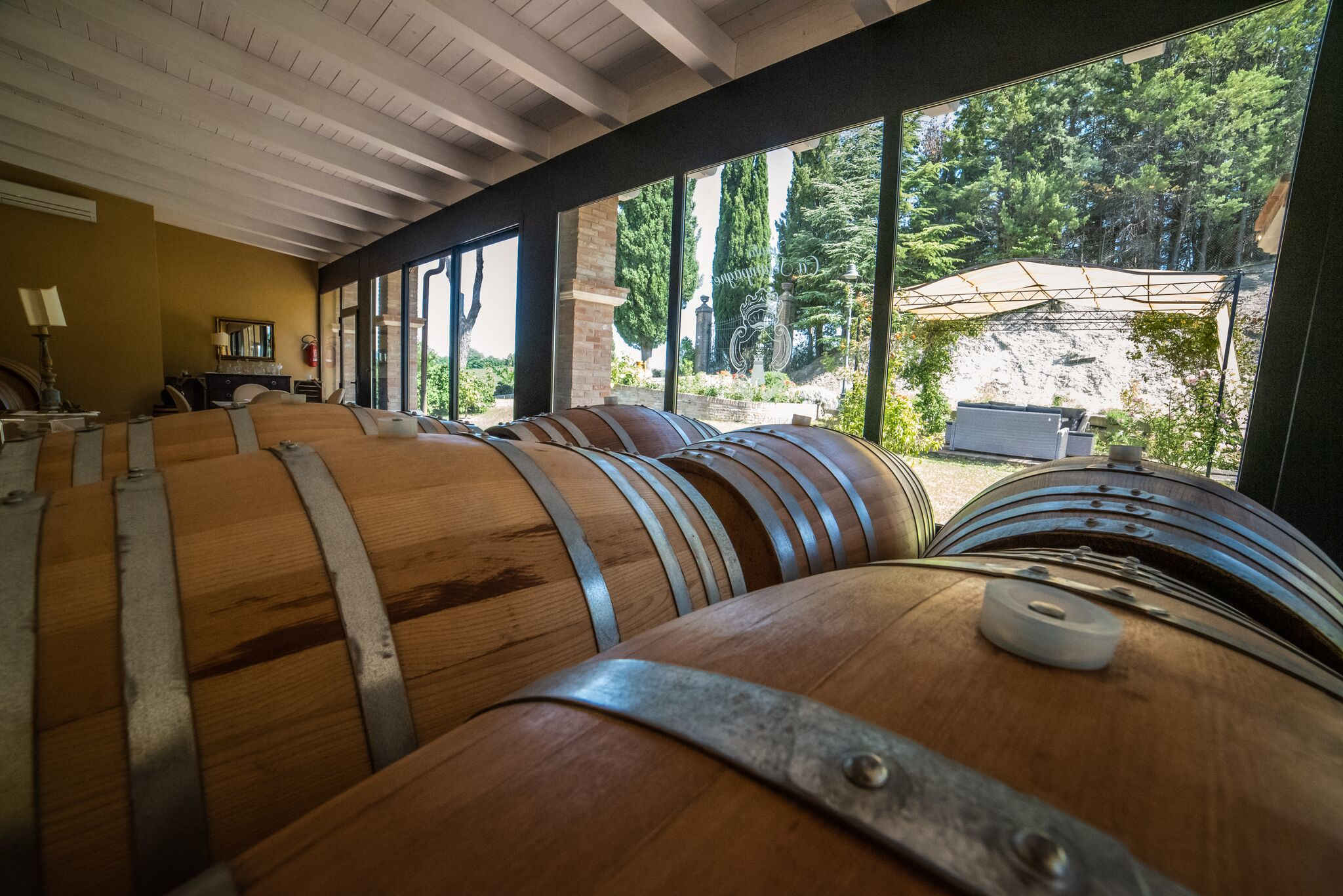
According to local tradition, wooden containers (barrels) are used only for one red wine, Sacradebucce, while the passito wines are aged in barrels and small casks made from local woods such as mulberry, oak, robinia, cherry, and ash.
Tradition
All our wines are produced with the utmost respect for family tradition and the local territory, both in the cultivation of the grapes and in the winemaking process.
Extensive studies and research into local customs passed down from father to son form the foundation of our knowledge and our constant pursuit of creating wines that leave a memory, an emotion — wines that can surprise and captivate.
Just like our labels, which are meant to represent a journey through the world of wine — a journey to be told and shared.
We produce so-called “natural” wines — an improper and non-regulated term in oenology, but one that, in common language, best expresses this kind of production.
We draw from local rural traditions what can no longer be found in books; therefore, no additives are used. Fermentations occur spontaneously with indigenous yeasts, with no clarification, no filtration, and manual bottling.
When necessary, only minimal amounts of added sulfites are used — but rarely. It is solely the grapes and time that create the quality defining the uniqueness of our wines.
Se Dio non voleva che bevessimo,
perché ha fatto il vino così buono?
– Charles Simic –